
- 97

- 96
- 96
- 96
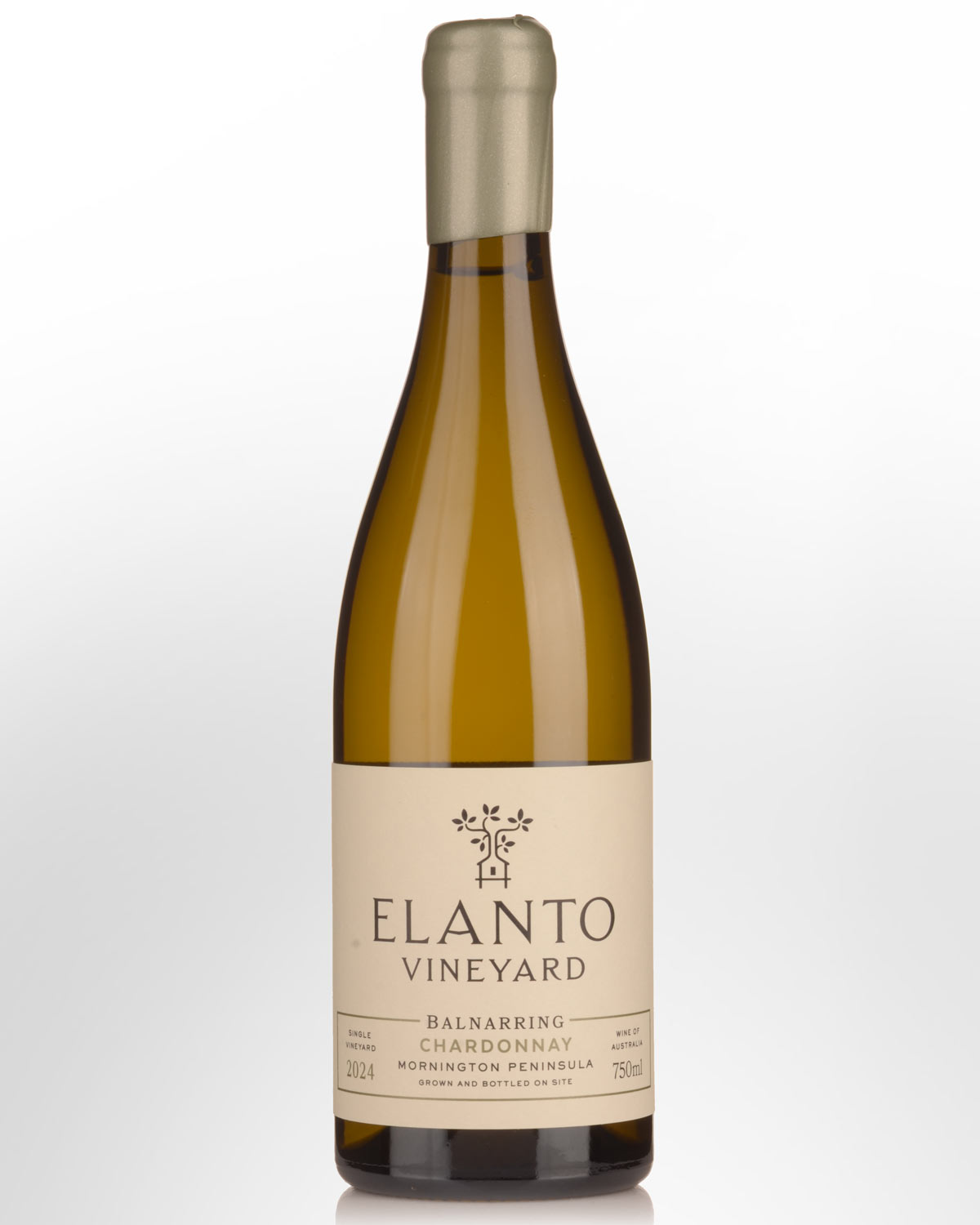
2024 Elanto Vineyard Chardonnay
Rich and enveloping with a long, expansive finish that displays a Burgundian like refinement.
Elanto Vineyard is fast becoming one of the most compelling projects on the Mornington Peninsula. Established in 2018 by Elizabeth and Tony Todaro with Sandro Mosele at the helm, the 10.6-hectare Balnarring site is planted at an extraordinary density over 11,000 vines per hectare, four times the regional norm. Yields are kept to just 300-500g per vine, resulting in small, concentrated bunches that carry the depth and power Sandro has long championed. Volcanic red soils, southeast exposure, and the cooling influence of Western Port Bay provide the setting, while meticulous organic farming and uncompromising vineyard detail push the wines into rare territory.
The three Chardonnay vineyards, Verge, Buckshot, and Seawinds, span 4 hectares on the lower slopes, where silt over clay transitions to lighter, gravelly soils rich in buckshot. The cool southerly airflow and soil profile preserve natural acidity and enhance mineral notes. Each vineyard was harvested and vinified separately, with hand-sorted fruit whole-bunch pressed directly into a mix of new and older French oak barriques for natural fermentation. After 10 months in barrel, the wine spent an additional two months in large concrete vats before bottling.
Brilliant pale straw colour with green highlights around the outskirts and a watery hue. Intense white peach, pear, ripe nectarine and dried honey aromas engulf the olfactory senses. Notions of crème brulee, citrusy nougat, cashew, subtle bacon fat and spice then chime in for additional complexity. Rich, concentrated and enveloping, a creamy textural feel is perfectly counterpointed by fresh acidity with mouthfilling white peach, fleshy pear and nectarine fruits melding into a creme brulee, citrusy nougat, delicate cashew and spice back drop. Boasting outstanding power and depth, it has a long expansive finish that displays a Burgundian like refinement.
Drink over the next 5-6 years.
Alc. 13.5%
Other Reviews…..
A terrific follow up to the inaugural release, coming out with more weight and body. Mid-straw gold and bright. Floral and waxy with lemon, spiced stone fruit, brown spices and honeycomb – lots within yet definitely in the savoury spectrum. Fuller bodied, rich, almost al dente with its phenolics and layers of texture via creamy, nutty lees. It’s detailed yet supple, with a succulence thanks to the all-important uplifting acidity. Moreish and compelling. Drink by 2034.
96 points
Jane Faulkner – James Halliday’s Australian Wine Companion
The Elanto vineyard – at Balnarring on the Mornington Peninsula – is 10.6 hectares of 11,111 vines each hectare, which equates to a vineyard made up of 117, 777 individual vines. This is the second release of a chardonnay from this remarkable vineyard. It’s made by Sandro Mosele. 85% of this release went through malo where very little of the 2023 release did.
This is seriously good. The intensity of fruit is the thing, and the associated length, though there’s a keen textural element and just plenty of wow factor besides. Yellow peach, citrus, nougat, honeycomb and lemon blossom notes charge thoughout. There’s a lot of fruit, a deal of acidity, and a sizeable serve of oak, but all work together and all feel commanding. Drink 2027-2032+
96 points
Campbell Mattinson – The Wine Front
The 2024 Balnarring Chardonnay is tighter, brighter and more primary than the 2023 tasted alongside. In the mouth, the wine is svelte and textural, and it shows all the sophistication of the site. The elevated malolactic percentage here contributes to the elevated sense of creaminess in the mouth. It's an excellent wine and will be even better in time. 13.5% alcohol, sealed under Diam. The fruit is handpicked into 10-kilogram baskets. The winery and vineyard are adjacent, and once in the winery, the fruit goes over a sorting table with rollers at the end of the elevator. The fruit is pressed direct to barriques—all French, mainly Sirugue (from the Forêt de Tronçais, in central France)—and fermented wild, with wild malolactic fermentation (5% to 10%). The 2023 Chardonnay wouldn't go through wild malolactic fermentation, but the red eventually did. The wine is taken out of barrel at Christmastime, after which it spends two months in concrete, and then goes to stainless for a further four months. Drink 2025-2039.
96 points
Erin Larkin - Robert Parker's The Wine Advocate
to most of Australia