Discontinued Flora & Fauna Collection
16 products
Collectors note: We cannot guarantee supply of any or all of the series in future consignments. Aberfeldy, Auchroisk, Aultmore, Balmenach, Bladnoch, Caol Ila, Clynelish, Craigellachie, Dufftown, Glendullan, Glen Elgin, Glen Spey, Linkwood, Mortlach, Pittyvaich, Rosebank, Royal Brackla, Speyburn and Strathmill were all part of the series at one time or other. Most are long discontinued with the rest slowly following suit and now extremely rare and increasingly difficult to source as remaining supplies dwindle.
For those new to the series, the 'Flora and Fauna', nicknamed by the late whisky writer, Michael Jackson, was a themed series of distillery only single malt whisky releases. Each distillery was given a particular creature as its symbol, which is elegantly displayed on each bottle's beautiful label. Gradually as distilleries were commercialised, closed or sold, the range of Flora and Fauna contracted, leaving these select remaining bottles collectable. Most often blended, whisky from each of these distilleries is rarely bottled as single malt, making each bottle from this collection even more prized.
- 84
- Discontinued
- Nicks Import
- Reduced
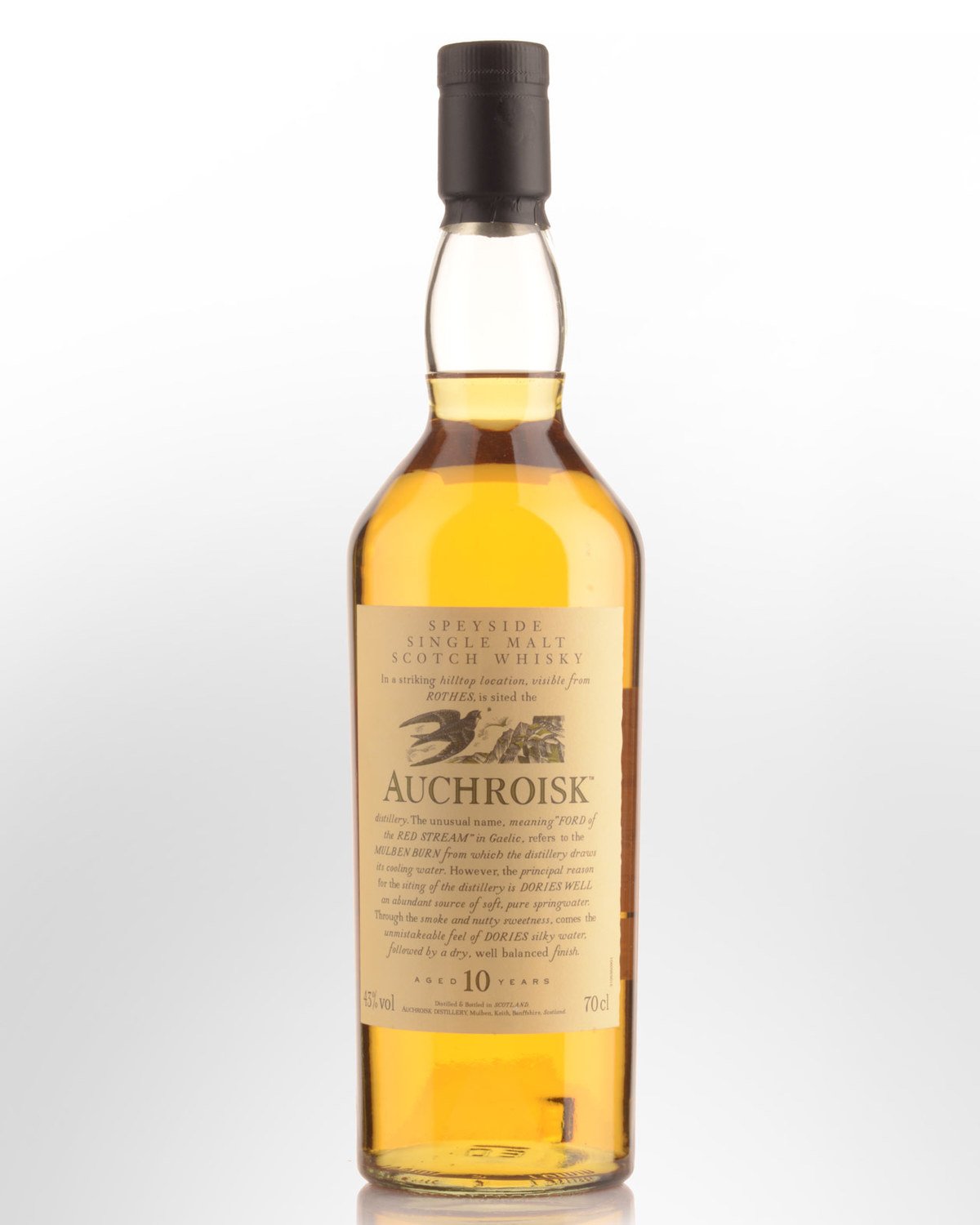
Auchroisk Flora & Fauna 10 Year Old Single Malt Scotch Whisky (700ml)Speyside, Highlands, SCOTLANDReduced from$149.99$99.99$99.99Bottle$1,199.88DozenABV: 43%One of the last available releases from Diageo's dwindling series.
"...a solid bottling. Good for casual drinking. I'm glad it exists." - whiskybase.com"Awkroisk" or "Ouchroisk"? Despite a name that's notoriously difficult to pronounce, this relatively new distillery (built in 1974) has garnered a quiet following. It's unusual to find because most of it disappears into the J&B blends. Single malts are rare, and were originally labelled as 'Singleton of Auchroisk'. Debuting in 2001, this is one of the only official bottlings (there have been less than a dozen in the distillery's history). It is arguably the most controversial of the Flora and Fauna series, and amongst the very last still doing the rounds via a small number of retailers globally. Over the years, some tasters have described 'off notes', others praise it for its subtle complexity that includes crème anglaise, cut grass, a delectable nuttiness and an unusual salty tang (sounds like your typical Auchroisk profile). Batch variation almost certainly plays a part. Future supply is not guaranteed, so if you're willing to take a punt on a new everyday drinker at a reasonable price, go for it!
Other reviews... Tangy orange on the nose, the malt amplified by a curious saltiness on the palate. 84 points - Jim Murrays Whisky Bible
...bready, softly salted. Simple but rounded and cohesive flavour. When I say it’s salty it’s a very integrated salt-crusted-bread sort of vibe – not brine or the intense alcoholic ‘saltiness’ you see in many whiskies. Pitched at a perfect level. Nicely put together, as most of the Flora and Fauna range are. I realise I haven’t said much to describe the flavour, which is a symptom of this whisky having such a subtle and cohesive one. You have to dig so hard to find the sweet liquorice, apple pie (crust-heavy), subtle spices, light woody nuances out of the semi-sweet, semi-dry, semi-salty whole. Gorgeous actually. 'Tickers' of any foods naturally gravitate towards the big bold flavours, but you have to appreciate something as nuanced, balanced, soft and simply as well-made as this while it’s in front of you. I’m sure there’s significant batch variation but this was surprisingly good. - whiskybase.com
- 92
- Discontinued
- Nicks Import
- Reduced
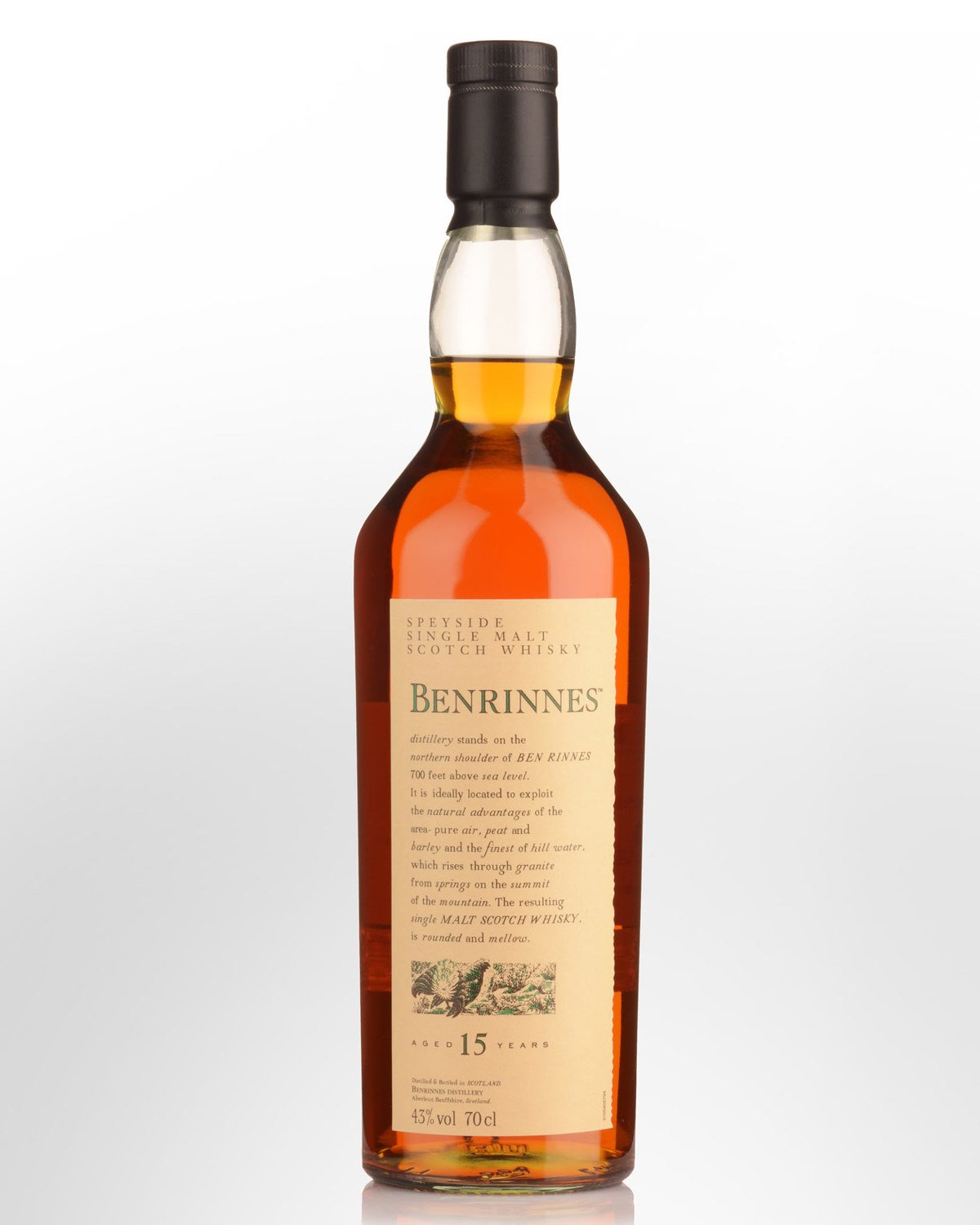
Benrinnes Flora & Fauna 15 Year Old Single Malt Scotch Whisky (700ml)Speyside, Highlands, SCOTLANDReduced from$169.99$139.99$139.99Bottle$1,679.88DozenABV: 43%"Admirable - that they would have kept this very unusual fat malt within the range." - whiskyfun.com
Benrinnes mavens will know that the distillery started a two-and-a-half distillation from 1974 (similar to Springbank), producing what's been described as "a rather-Mortlach-like meaty spirit" that's also been compared with Clynelish. In 2007 they changed back to a double distillation, however the set up maintains a few production quirks like Mortlach. In addition, Benrinnes is one of the last to use traditional worm tubs for condensation. The Flora & Fauna bottling represents some of last remaining distillate from the 'two-&-a-half-times' era, and epitomises the house style as a heavier malt, matured primarily in European oak. It's one of those sherried styles where the richness of the malt and the sherry find symmetry. This bottling also captures some of that beefy character often associated with the distillery. Rich dried fruitcake flavours feature in a full-bodied delivery, complexed by hints of port-soaked tobacco, malt extract, fruit'n'nut dark chocolate, coffee cake and peppery warmth. The distinctive - almost chewy - mouthfeel is perhaps the defining element here, and retasting over several days found the whisky continued to improve. Kudos to Diageo for bottling Benrinnes at what feels like an appropriate age. 43% Alc./Vol.
Other reviews... Right, not totally randomly. Last time I tried this expression that was around the year 2000 (WF 83). A worthy aperitif yet again, I hope. Colour: gold. Nose: there, no truce this time, the whistle blows and we’re in action. Tallow and marrow, parsley, bouillons, ham, onion soup, dry sherry, plus most certainly some umami as well as the 6th aroma, the aroma/taste of fat, which is called oleogustus, apparently (sounds a bit like dog Latin, no?) There’s also a thing called kokumi, but we still need to check that. Mouth: so, kokumi and oleogustus (joking only a bit) and a huge fatness indeed, rarely to be experienced with any whiskies. In short, more tallow and marrow, ground coffee, salt, miso, and Maggi. Spectacular, but perhaps a little unlikely at times. Finish: long, very meaty and salty. Chorizo and beef juice. Really. Comments: totally odd – and admirable - that they would have kept this very unusual fat malt within the range. Perhaps more a sauce than malt whisky, after all. 86 points - whiskyfun.com
- Nicks Import
- Reduced
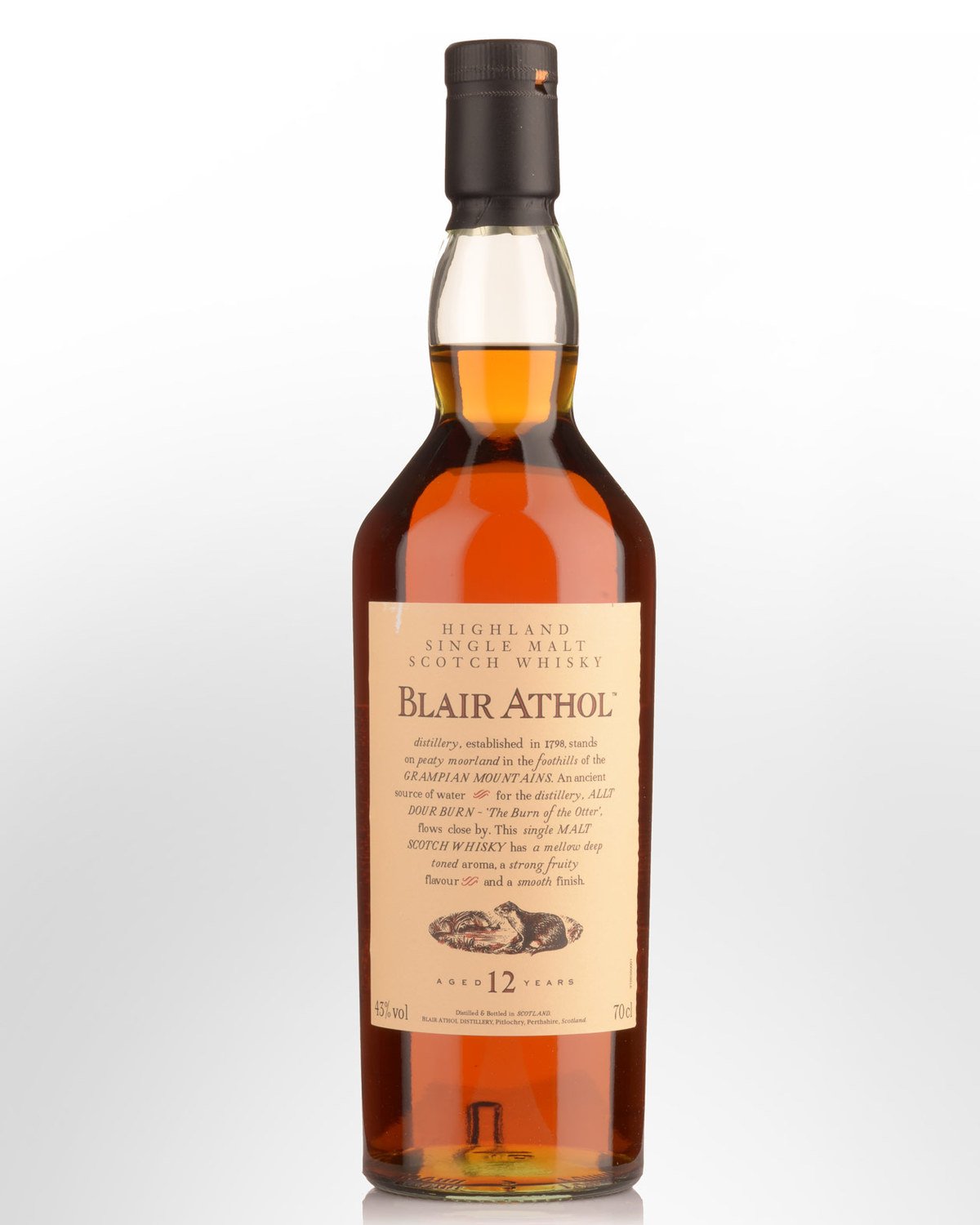
Blair Athol Flora & Fauna 12 Year Old Single Malt Scotch Whisky (700ml)Highlands, SCOTLANDReduced from$169.99$119.99$119.99Bottle$1,439.88DozenABV: 43%Founded in 1798 by John Steward and Robert Robertson, and originally named 'Aldour', after the Allt Dour burn water source, Blair Athol is one of the oldest working distilleries in Scotland. It closed in 1932 after which the venture was bought by Arthur Bell and Sons, but didn't open again until it was rebuilt in 1949. In 1973 two stills were added to the existing two. Not surprisingly, it is today the signature malt of the Bell's blend, the most popular blended whisky in the UK. The house style is typically rich, spiced, gingery and nutty.
Other reviews... Earlier batches have been pretty good in my opinion (like, 2005, WF 85) but the older ‘black labels’ from the 1970s were even better. In case you’re wondering, the mascot on the label is some kind of beaver, as far as I can tell. Colour: gold. Nose: liquid cake, as they would say at Pitlochry’s tearooms, where you would usually meet many very friendly ex-distillery workers and other engaging senior citizens. Brioche, Golden Grahams, almond croissants, soft malt, cigarette tobacco, shortbread… It’s really very cake-y. Mouth: in keeping of the nose, just much drier, almost bitter at times. A lot of black tea, which is very fitting isn’t it, bitter chocolate, crunching coffee beans, those sorts of things. If you like genuine ‘black’ chocolate, you’ll love this. Some dry walnut wine too, ‘ideas’ of fino sherry, etcetera. Good body at just 43%. Finish: a little short and bitter. Big maltiness in the aftertaste, as well as some wood smokiness. Comments: I believe it got drier than earlier batches over the years, not too sure. I like it anyway. 84 points - whiskyfun.com- Nicks Import
- Reduced
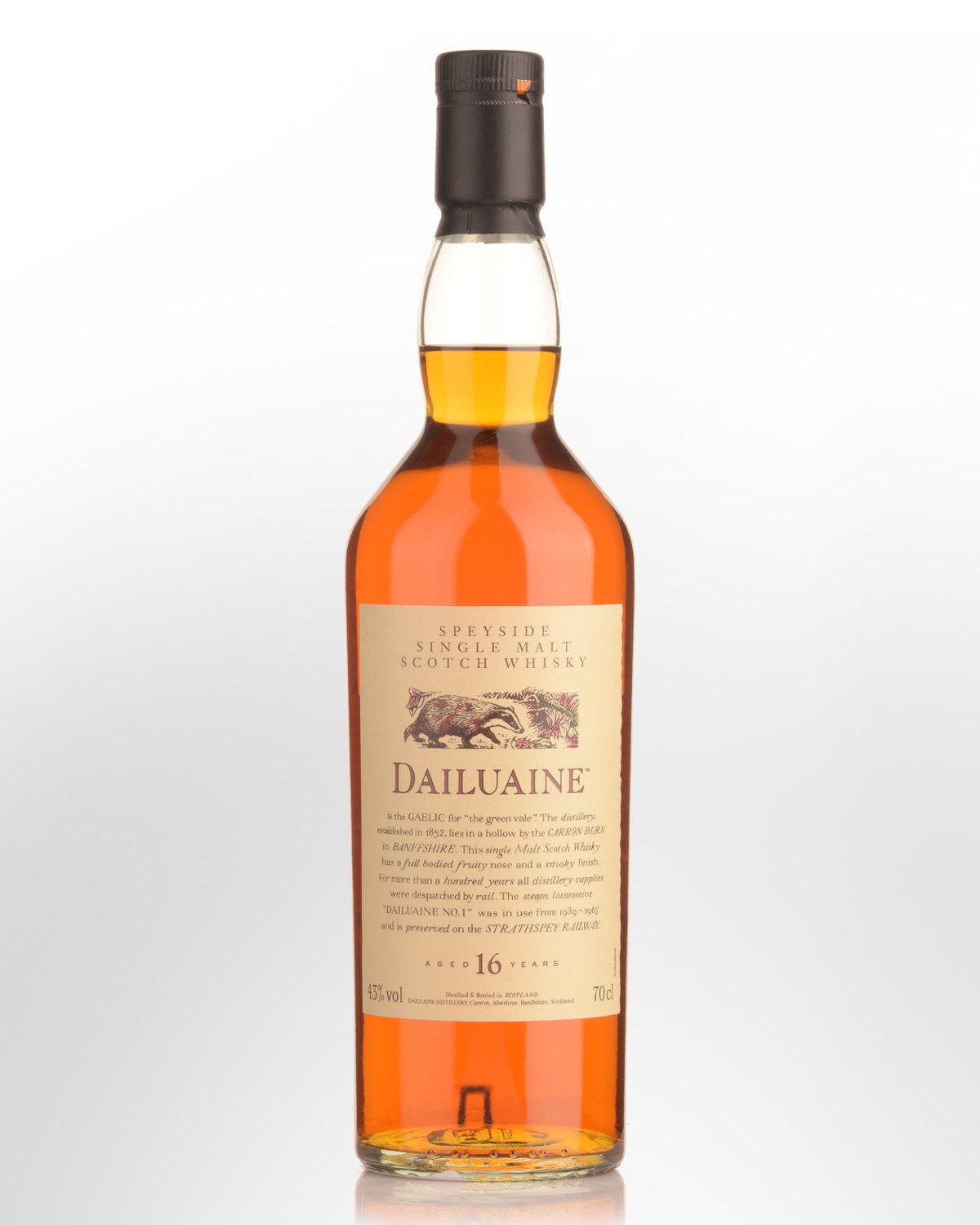
Dailuaine Flora & Fauna 16 Year Old Single Malt Scotch Whisky (700ml)Speyside, Highlands, SCOTLANDReduced from$199.99$139.99$139.99Bottle$1,679.88DozenABV: 43%"Substantial. One for a cigar." - Dave Broom, whiskyadvocate.com
Pronounced "dal-u-ayn", many visitors to Speyside would be blissfully ignorant of the existence of this gem. A mile off the main Aberlour to Grantown road, the only evidence of its whereabouts are the plume of steam and unmistakeable smell of the Dark Grains plant. The location inspired Alfred Barnard to write, “Never was there such a soft, bright landscape of luxuriant green, of clustering foliage, and verdant banks of wildflowers, ferns and grasses." The undoubted beauty was not the reason the site was chosen - good quality water from the Bailliemullich Burn, the local supply of barley and the proximity to the Speyside Railway Line are more likely reasons.
Built in 1865 the distillery was once part of the Dailuaine-Talisker Distilleries Co Ltd which owned the renowned Skye distillery and later went on to build Imperial. Dailuaine has seen several significant changes. A Dark Grains plant was commissioned to process pot ale and draff into a high protein cattle feed. The splendid granite double-storey dunnage cask warehouses lie empty, as all Dailuaine whisky is tankered away to be filled into casks at a central warehousing complex. Today this whisky forms a major part of Dewars blends thanks to its robust flavours, but is also offered in smaller quantities as a single malt.
Other reviews… These days the mighty Mortlach is a known quantity, but Diageo’s two other meaty sites—Benrinnes and Dailuaine—remain in the shadows. This is big, boisterous, and sherried, but there’s less of the gravy-browning elements you get from the other two; at Dailuaine it is fruit that is promoted alongside Seville orange, treacle, and the inevitable raisin and date. There are nods to PX sherry as well. Every bit as good as Mortlach.
88 points- whiskyadvocate.com (Summer 2013), reviewed by: Dave Broom...I last tried the F&F around the year 2000, so even before Whiskyfun. WF 81 but a lot of water has gone under the bridge since those heroic (ahem) times. Colour: gold. Nose: cake and grasses, a touch of plasticine and soap, sulphur stones, mown lawn, ink, roasted walnuts… This really is a singular style. Shall we call it ‘un-commercial’? Mouth: rather un-commercial indeed, malty and grassy, with something burnt, notes of Mars bars (or any other bars, really, Twix, whatever…) and growing notes of chicory and office coffee. Finish: medium yet fatter, and very malty. Was it finished in Ovaltine casks? Comments: this humble taster hasn’t changed one iota within 18 years. Is that bad, doc? 81 points - whiskyfun.com
...Nose: Clean. Sweetish. Pronounced barley sugar. Some sherry. Palate: Medium-bodied. Very smooth indeed. Clean, malty, nutty. Finish: Nice balance of fragrant smoky dryness. Overall: Almost too perfect. Beautifully put together, but not quite memorable.
- Michael Jackson, whiskymag.com- Nicks Import
- Reduced
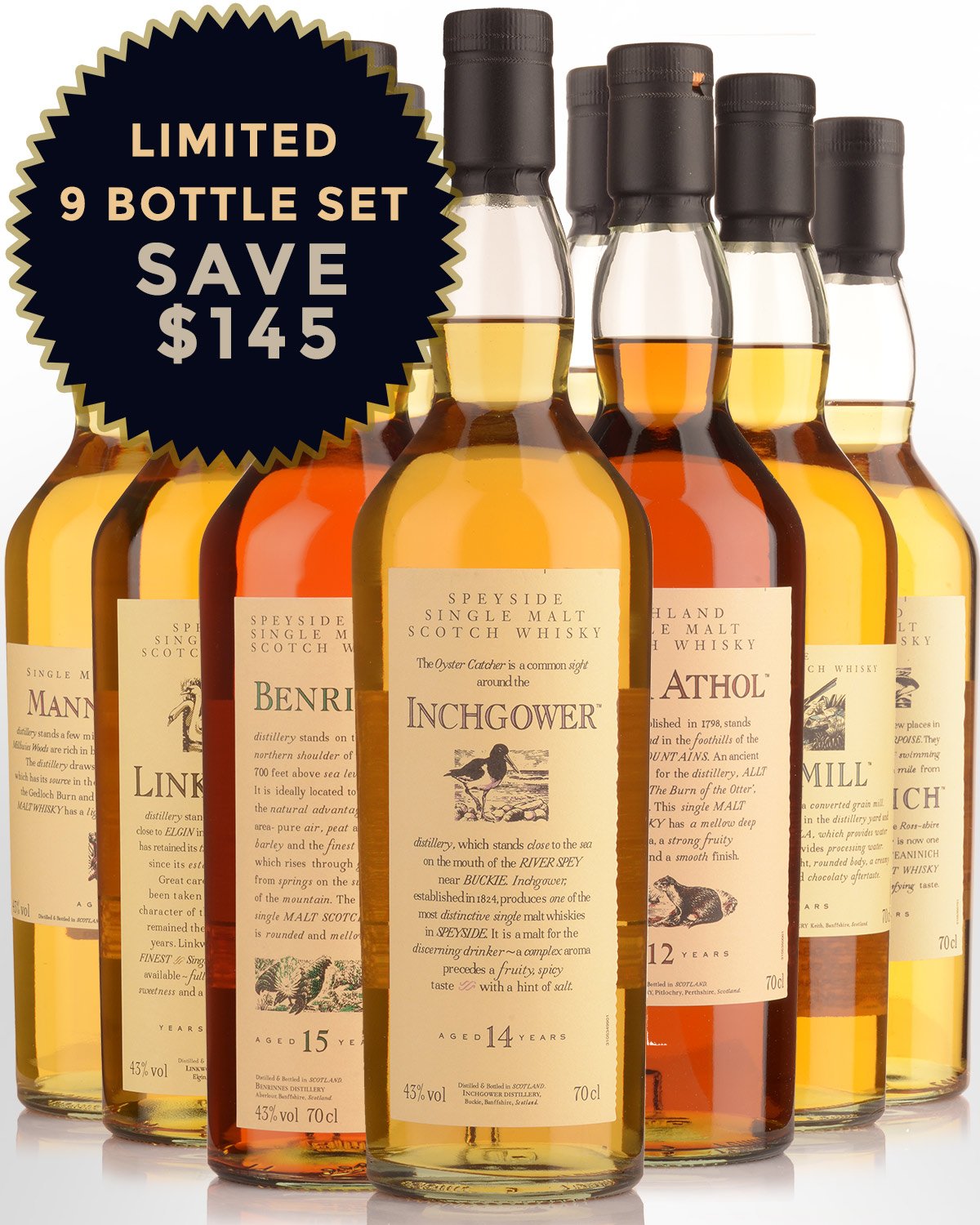
Diageo Flora & Fauna Series Single Malt Scotch Whisky Set (9x700ml)SCOTLANDReduced from$1,145.00$999.00$999.00Bottle$11,988.00DozenBuy as a set of 9 bottles and save $145.
Collectors note: We expect this to to be the final shipment at these prices with increases anticipated across all lines. We cannot guarantee supply of any or all of the series in future consignments. Dailuaine, Auchroisk and Mortlach are becoming increasingly difficult to source. Aberfeldy, Aultmore, Rosebank, Pittyvaich, Craigellachie, Dufftown, Bladnoch and Caol Ila were also part of series but now extremely rare.
For those new to the series, the 'Flora and Fauna', nicknamed by the late whisky writer, Michael Jackson, was a themed series of distillery only single malt whisky releases. Each distillery was given a particular creature as its symbol, which is elegantly displayed on each bottle's beautiful label. Gradually as distilleries were commercialised, closed or sold, the range of Flora and Fauna contracted, leaving these select remaining bottles collectable. Most often blended, whisky from each of these distilleries is rarely bottled as single malt, making each bottle from this collection even more prized.
Included in this set are one 700ml bottle of each of the following whiskies:
Benrinnes 15 Year Old
Blair Athol 12 Year Old
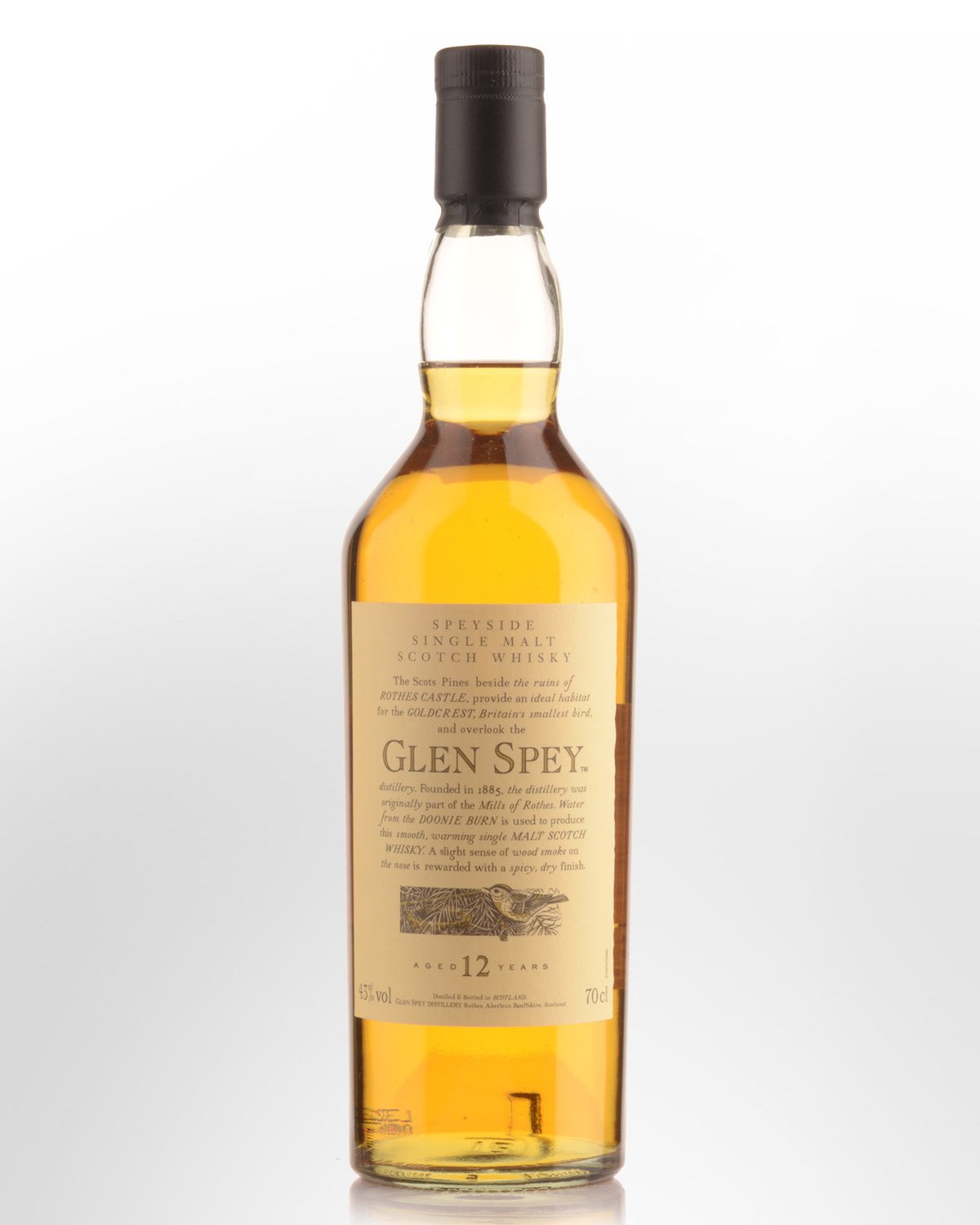
Glen Spey 12 Year Old
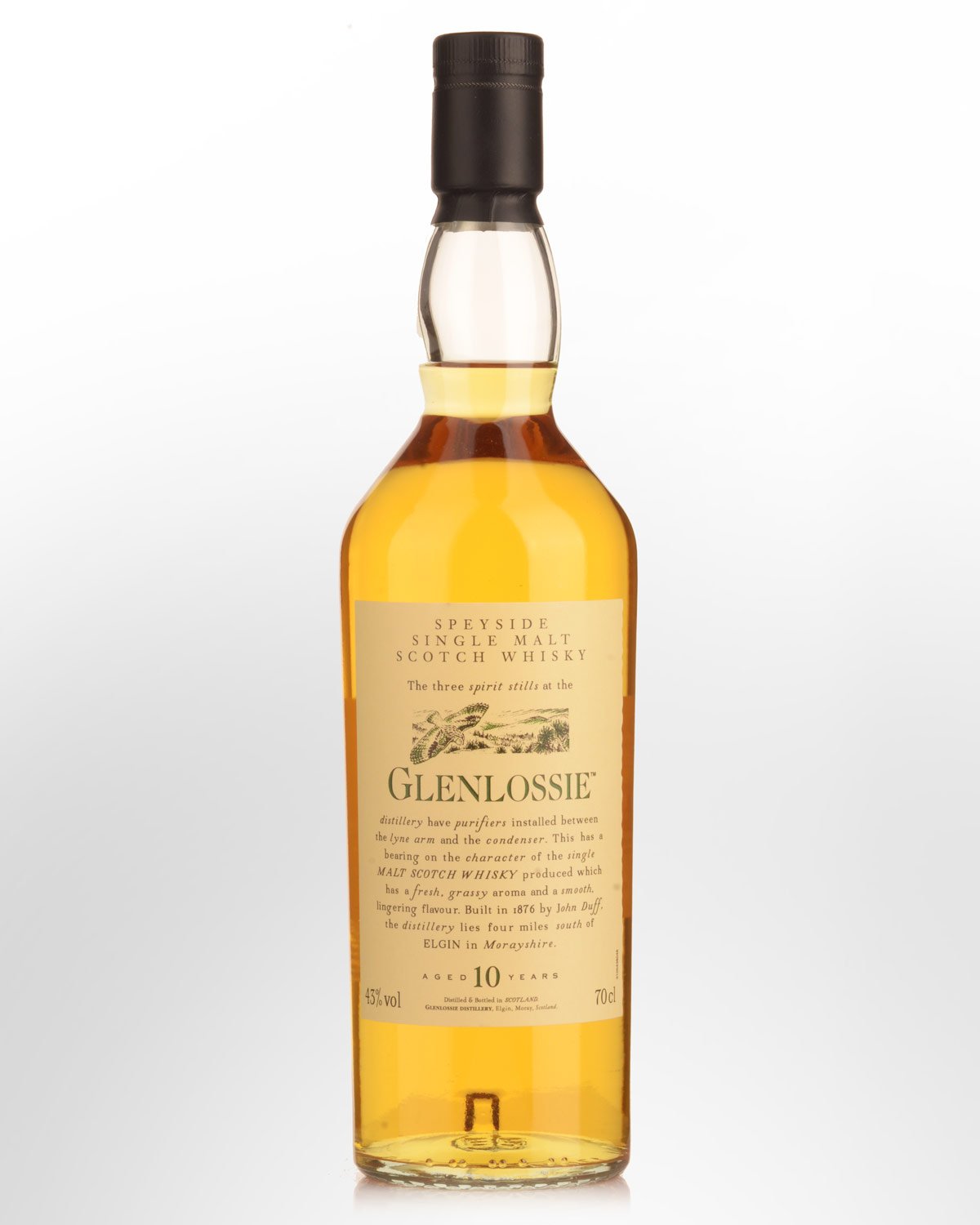
Glenlossie 10 Year Old
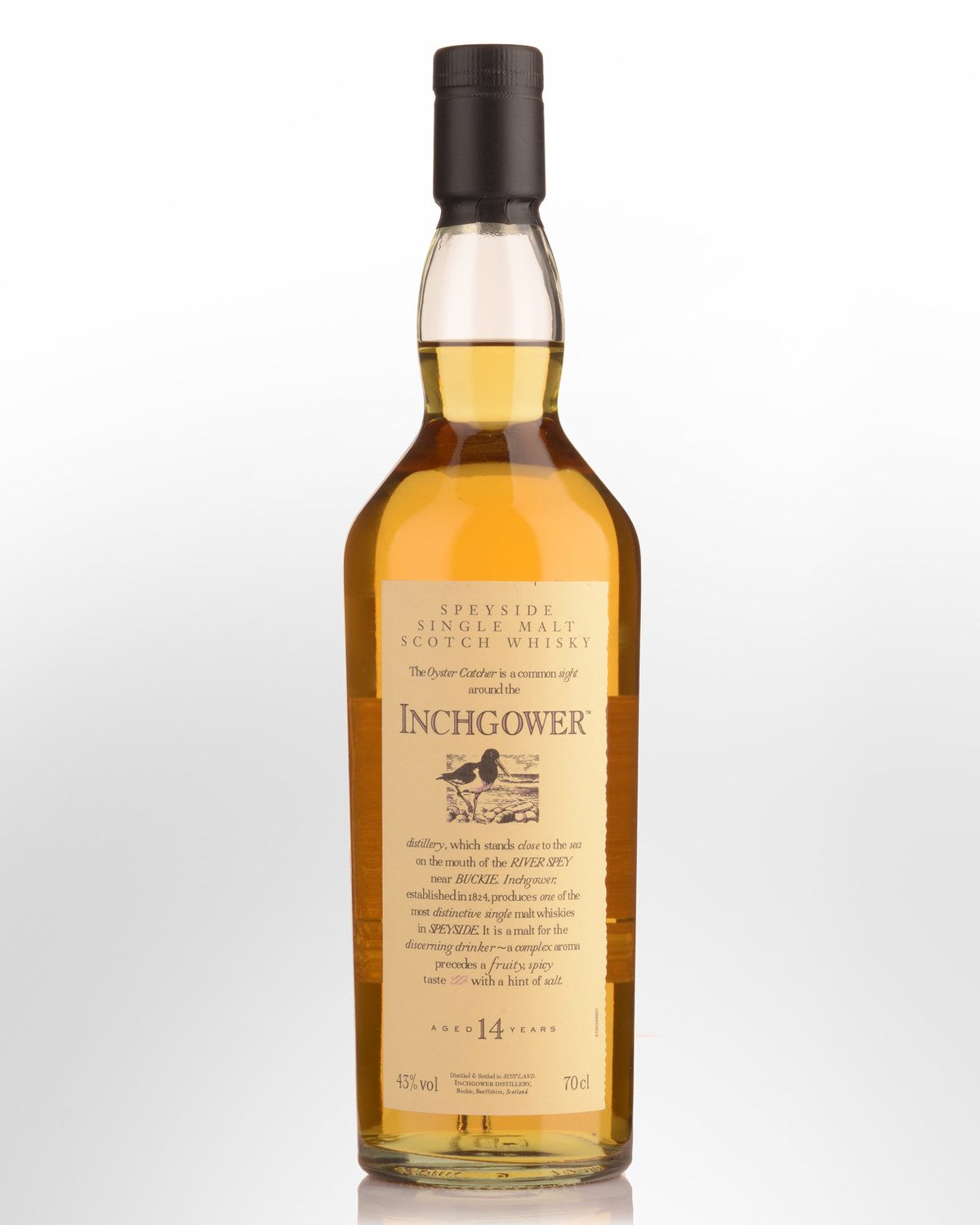
Inchgower 14 Year Old
Linkwood 12 Year Old
Mannochmore 12 Year Old
Strathmill 12 Year Old
Teaninich 10 Year Old
- Speyside, Highlands, SCOTLAND$150.00$150.00Bottle$1,800.00DozenABV: 43%Although this distillery is operating, it remains one of the hardest Speyside whiskies to find. Other reviews... The kind of firm, busy malt you expect from this distillery, plus some lovely spice.... Great to see it back to its more natural, stunningly beautiful self.
90 points - Jim Murrays Whisky Bible 2020 The Glen Spey distillery would have continued to slip under the radar of single malt chasers, had it not been for a few favorable releases. Formerly known as the "Mill of Rothes", it was built in 1878 by James Stuart & Co (who later went on to buy the Macallan distillery) as an addition to its cereal business. The rarity of Glen Spey as Single Malt bottling is largely due to its use as an essential component of J&B's blends, however Diageo has produced this rare Flora and Fauna bottling. Bottled as a 12 year old and 43% ABV, the particularity of this Scotch resides in its production method, with Pot Stills equiped with "purifiers", redirecting some vapour to reflux within the still to produce a less feinty and lighter spirit. - Nicks Import
- Discontinued
- Reduced
Glenlossie Flora & Fauna 10 Year Old Single Malt Scotch Whisky (700ml)Speyside, Highlands, SCOTLANDReduced from$149.99$109.99$109.99Bottle$1,319.88DozenABV: 43%Notable as one of the only official Glenlossies ever offered, this relic from Diageo's Flora & Fauna series was originally released in 1990 and is now discontinued. The distillery's generally high-quality output has only otherwise been available via independents. It explains why Glenlossie remains obscure for drinkers while maintaining a top reputation among the blending community - despite its considerable history. Whisky boffins will be interested to know the distillery closed for 18 months for a major upgrade in 2018, including the installation of two external washbacks. That makes this distillation one of a dwindling number of pre-renovation bottlings. From the outset, Glenlossie’s stills were fitted with purifier pipes which carry heavier alcohols back into the body of the still to be redistilled. These add a certain oily textural quality to the spirit. Long fermentations help to promote a grassiness in the new make. All up, the house style is quintessentially Speyside with honey and ripe orchard fruits to the fore - in particular apples and pears. At ten years of age, you won't get a particularly complex malt, but this bottling is known for being gentle, sweet and accessible. 43% Alc./Vol.
- Speyside, Highlands, SCOTLAND$129.99$129.99Bottle$1,559.88DozenABV: 43%
"The freshest malt you could wish for...An intense, perfect aperitif."
- Dave Broom, whiskyadvocate.comNote: Product has come from a private collection and as such has some minor scuffing/scratches/handling marks. Actual product not pictured.
A whisky from a very quiet distillery, this Diageo release has been pretty much the only generally available bottling from Inchgower, which is otherwise marketed by independents. The majority goes to blends, being a key part of Bell's and also employed by Johnnie Walker and White Horse. Built in a coastal Speyside locale in1871 to replace Tochineal Distillery but liquidated in 1903, the Buckie Council purchased the concern in 1936 and ownership was transferred to Arthur Bell & Sons Ltd in 1938. Bells modernised the distillery and expanded the number of stills. Now owned by the corporate giant, Diageo, it's reported that less than one percent of the total production is bottled as a single malt.This 'Flora & Fauna' Inchgower features a picture of an Oyster Catcher bird, an annual visitor to the region where the distillery is located. Dave Broom describes it as "The freshest malt you could wish for. Perfumed and appetising" while maltmadness.com offer some very complimentary reviews on the overall quality of output from this distillery. Put it on your shortlist.
Tasting note: Pale straw gold. Very pretty with moderate, pillowy aromas of cream tea biscuits, straw bale, muted honey, emerging fruitiness and possibly a puff of distant peat. Delicate, graceful delivery comes across like a well-honed blend with a harmonious interplay of grain, vanilla and orchard fuit flavours building towards the finish. Ends crisp, delicately briny, tangy and medium long. Elegant and distinctive. 43% Alc./Vol.
Other reviews... You could argue that there’s an element of auto-suggestion at work when you pick up saltiness in Inchgower, after all, it comes from a fishing port (Buckie). But taste it blind and there it is — an unmistakable salinity on nose and palate which, when combined with lemon accents, cumin seed, thin fruit syrups, and green grapes, makes this an intense, perfect, aperitif.
82 points- Dave Broom, (Fall 2011), whiskyadvocate.com...Wasn’t this the last of the official Inchgowers? I don’t think the owners keep bottling this baby… Colour: straw. Nose: nothing like the old one. This is a lightish, rather hayish and barleyish malt, although it tends to develop nicely, with notes of overripe apples plus, indeed, a few herbal notes that do hint at the old one. Chamomile tea? It’s all light and even a little ‘diaphanous’. Mouth: excellent! Seriously, this is another surprise, we have a rather zesty and even slightly salty/coastal start, the whole unfolding on oranges, rhubarb, even kiwis and other very ‘nervous’ fruits. Yep, tart ones. All that plus the obligatory overripe apples. It’s only after one minute that it becomes just a wee tad cardboardy and drying. Finish: long, with unexpected notes of pineapples and even Viognier (not into wine? Google is your friend ;-)). Comments: goody good, how could I live without knowing anything about this baby, except that it existed! Lovely light style!
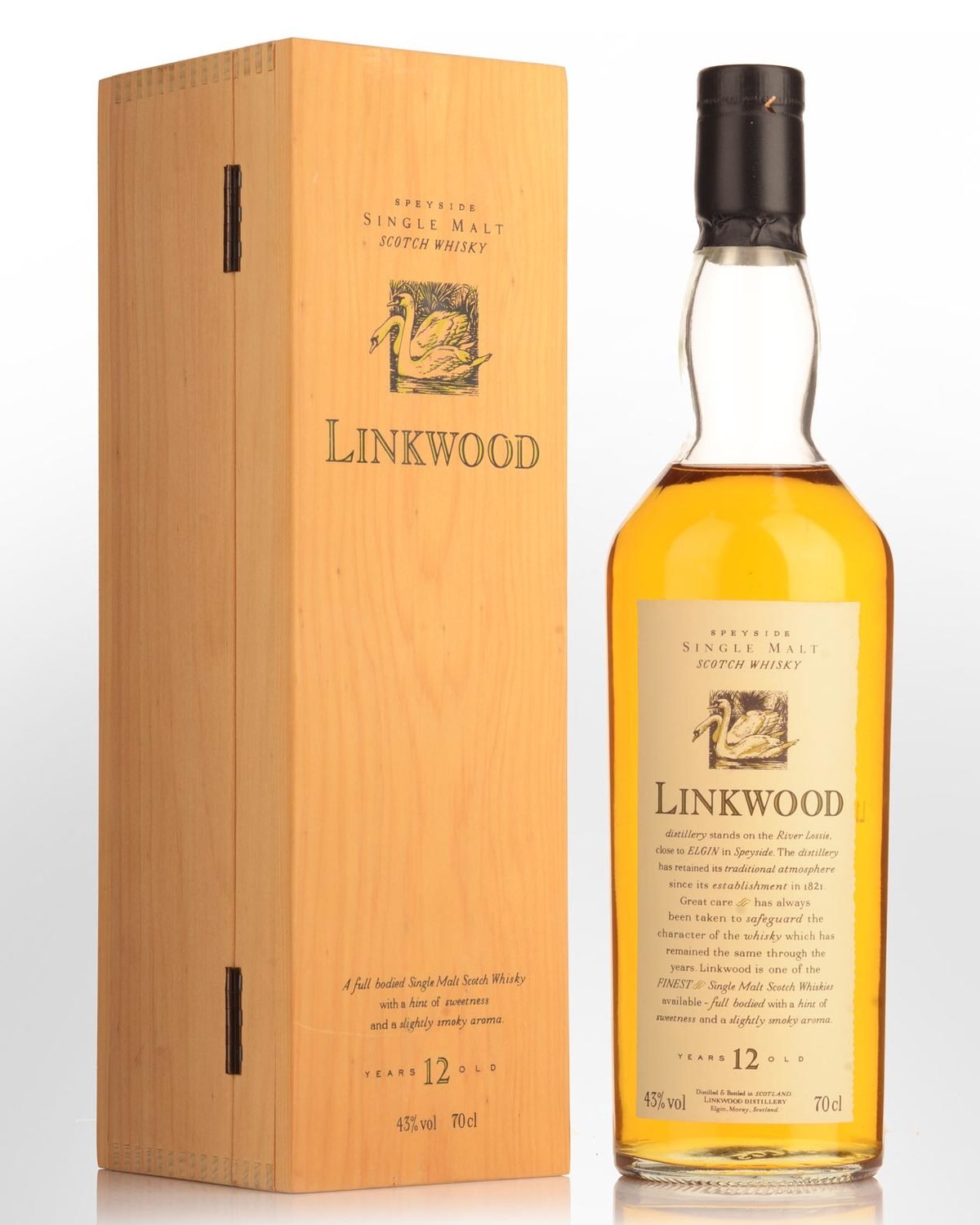
86 points - whiskyfun.com - Speyside, Highlands, SCOTLAND$499.00$499.00Bottle$5,988.00DozenABV: 43%A first release Linkwood from the long discontinued 'Flora & Fauna' series. Linkwood is another of Diageo's quiet distilleries that produces malt whiskies for blending, predominantly for the Bell's & Haig labels and has almost exclusively been bottled as a single malt by independents. The Flora & Fauna label, which has yielded terrific whiskies from silent or obscure distilleries in the past. We find the Linkwood style to be wonderfully fruity, with x Bourbon in the main. 40% Alc./Vol.
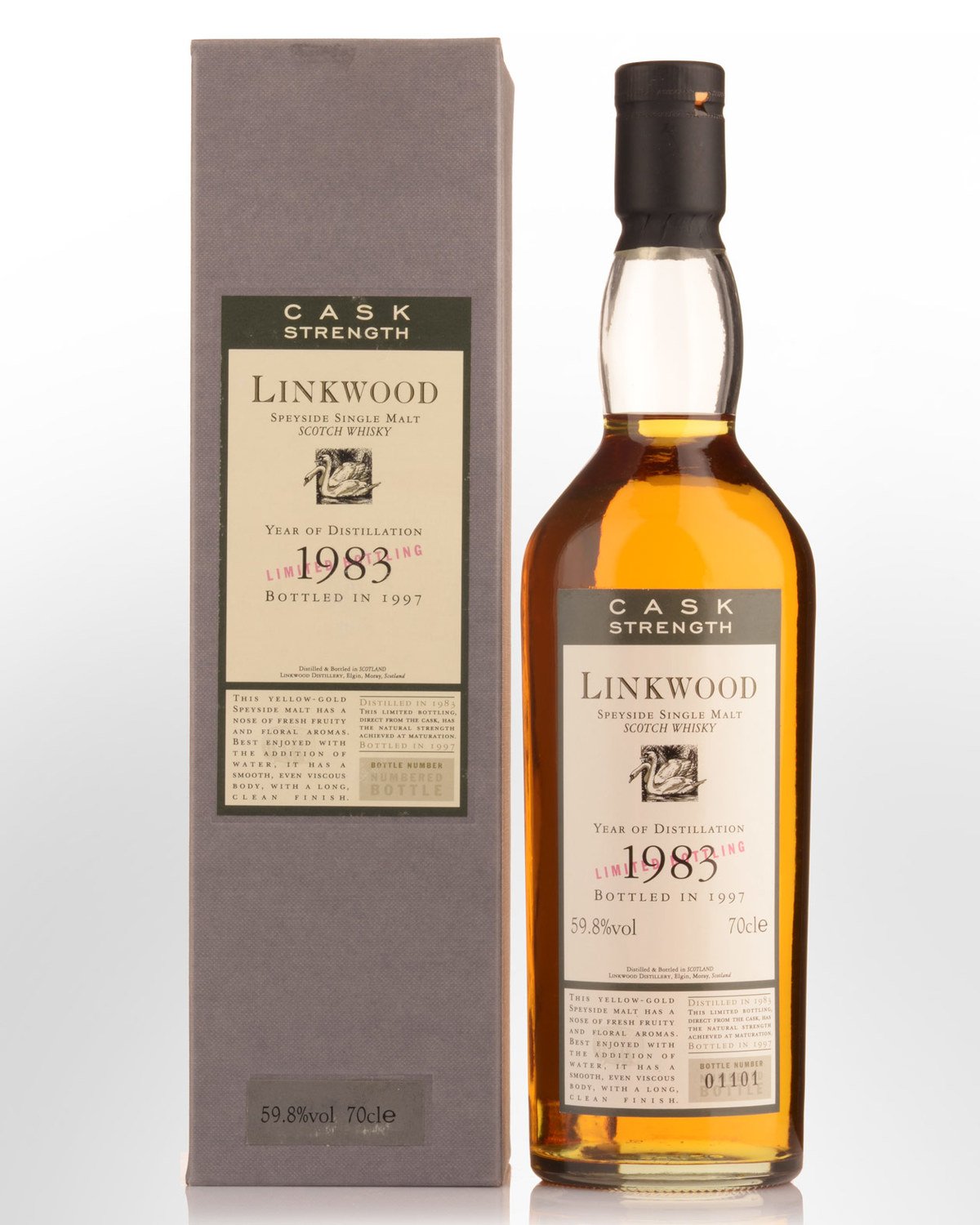
- Speyside, Highlands, SCOTLAND$449.00$449.00Bottle$5,388.00DozenABV: 59.8%Initially, Diageo's Flora & Fauna series was available only at the malt's distillery of origin. The aim was to offer visitors a 'take home' taste. Gradually the collection made its way out of the distilleries and onto the shelves of top whisky purveyors. This unusual 1983 vintage Linkwood (bottled 1997) was one of a limited number of cask strength editions that were included in the collection and distilled a couple of years before the distillery's original two stills ceased production. We have tasted several Linkwoods at natural strength and they have been nothing short of superb.
One only to sell. Excellent condition. 59.8% Alc./Vol. - Speyside, Highlands, SCOTLAND$160.00$160.00Bottle$1,920.00DozenABV: 43%
Note: Product has come from a private collection and as such has some minor scuffing/scratches/handling marks. Actual product not pictured.
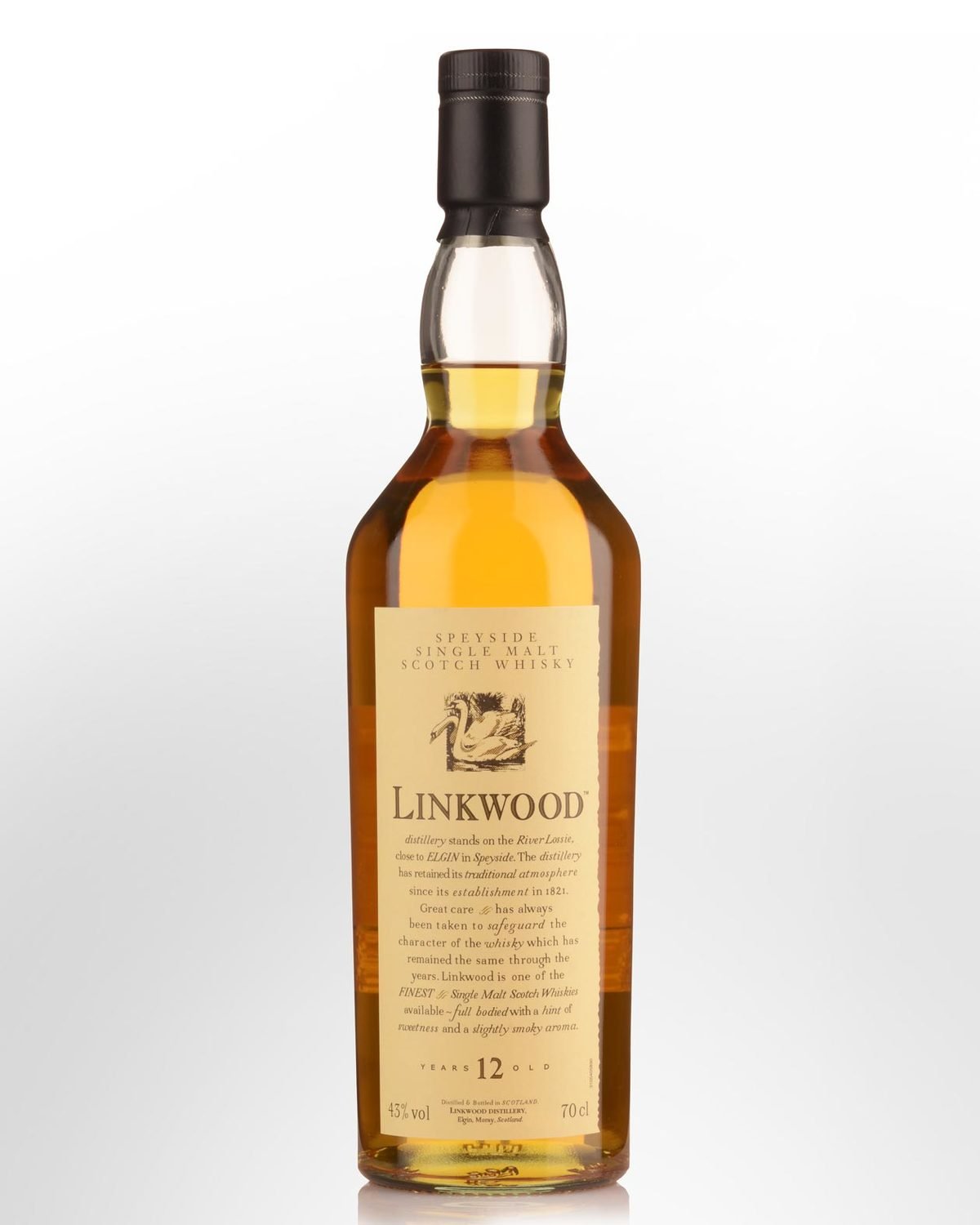
Linkwood is another of Diageo's quiet distilleries that produces malt whiskies for blending, predominantly for the Bell's & Haig labels and has almost exclusively only ever been bottled as a single malt by independants. Linkwood starts life in the light to medium bodied Speyside camp, typically offering floral notes, freshly cut grass, apple and peach. As the whisky matures, it intensifies in texture and richness but retains much of its orchard fruit character. Whisky writer, Dave Broom explains, "The fragrance is achieved by creating very clear wort, having a very long fermentation and distilling (slowly to maximise copper conversation) in pairs of stills in which the spirit is larger than the wash, allowing even more copper contact."Other reviews... I last tried this little F&F in 2009 (WF 82). I believe, but I could be wrong, that they’re still making it. Not too sure, actually… Colour: straw. Nose: much less easy and floral than expected, this has rather stones, new magazines, asparagus and leek, then bone dry beer and a little mutton suet. A handful of bitter almonds. Mouth: rather sweeter, with good lemon (candies) and orange blossom honey, while the background remains grassy and rather sharp. We’re talking cut grass and green-blue tea. A little olive oil too, even the mouth feel is rather oily. Finish: medium, grassy, with a few fresh walnuts and a good cup of unsweetened herbal tea. Say a blend. The lemons are back in the aftertaste. Comments: they could have done an easy Linkwood; they have not. I like! 83 points - whiskyfun.com
- 84
- Discontinued
- Nicks Import
- Reduced
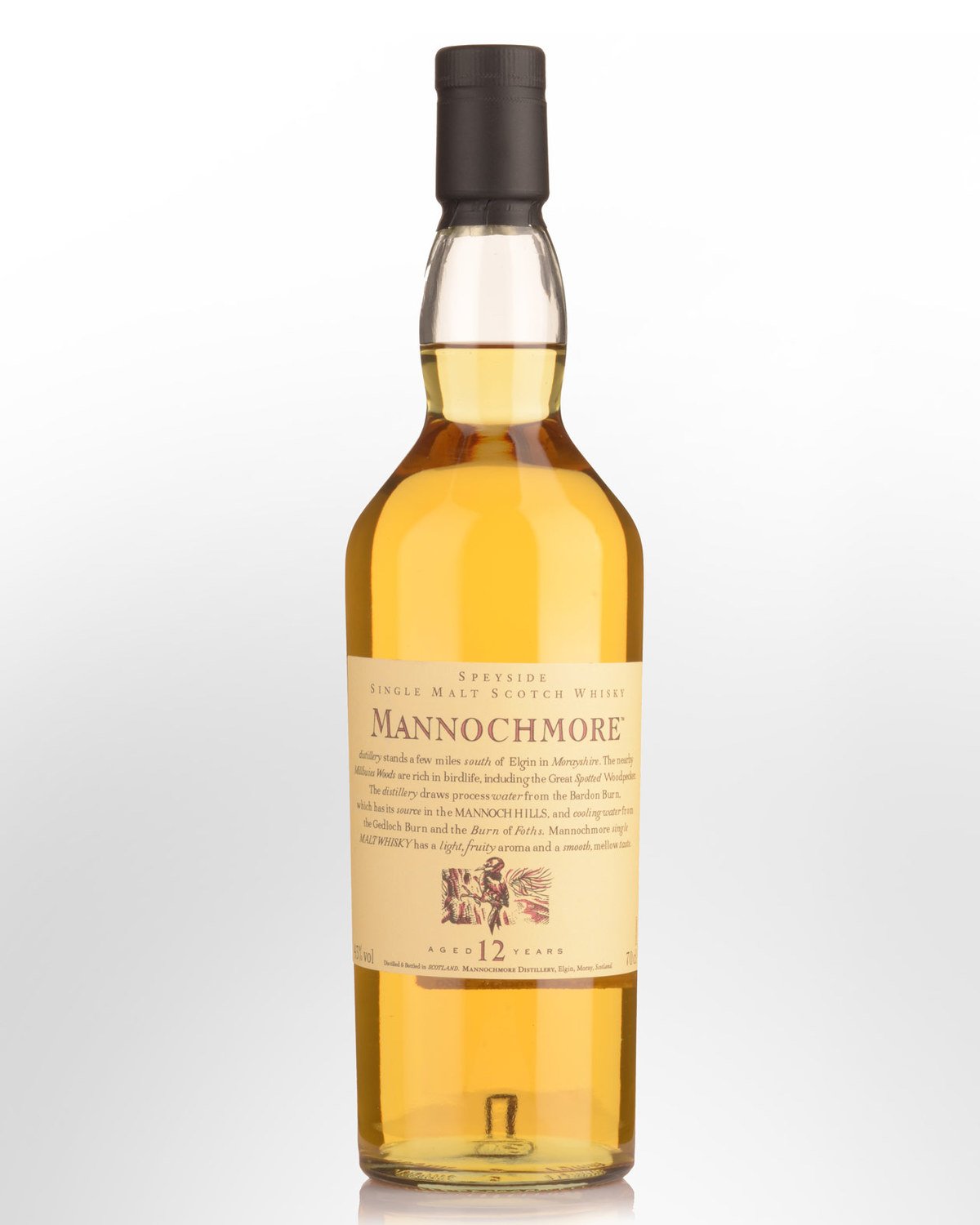
Mannochmore Flora & Fauna 12 Year Old Single Malt Scotch Whisky (700ml)Speyside, Highlands, SCOTLANDReduced from$149.99$119.99$119.99Bottle$1,439.88DozenABV: 43%"...cannot not remind us of Bruichladdich. In fact, it’s becoming immensely melony, this is quite spectacular." - whiskyfun.com
Another rare offering in the Flora and Fauna collection and one of Diageo’s best-kept secrets. In fact, of Speyside's fifty or so distilleries, Mannochmore is probably the hardest to find, both in terms of its physical location and market presence. Founded in 1971, its output remains destined for one of Diageo's blends (namely, Haigs which sells around 3 million bottles annually). Drowned out by the whispers of its more prominent neighbours, Longmorn and Benriach, the twelve year old Flora & Fauna edition which debuted in 1992 remains the first (and pretty much only) official bottling. The whisky seems to have found fans on the tasting panel at Whisky Magazine with both Martine Nouet and Dave Broom reviewing the whisky favourably, whilst Jim Murray didn't see the appeal.
Other reviews... Quite a greasy dram with sweet malt and bitter oak. 84 points - Jim Murrays Whisky Bible 2020
Already tried this baby, but wrote very meagre tasting notes. Colour: white wine. Nose: there’s a chalky grassiness at first, then more lemons and green apples, as well as touches of Provence melons, which cannot not remind us of Bruichladdich. In fact, it’s becoming immensely melony, this is quite spectacular. In the background, just touches of linseed oil, and perhaps orange blossom water. But this melon! Mouth: well, there sure is a little melon again, but there are more pears and apples, and then bags of cereals, barley, almond paste, earl grey tea, and in the back, a little chalk and more linseed oil. Soft citrus, perhaps citron liqueur. Finish: medium, a tad spicier. Comments: this one from an old opened bottle, so it may have benefitted from breathing. And no, I don’t store my bottles near the melon stash. Wow, this melon! 83 points - whiskyfun.com
Notes from the bottlers... NOSE: The first impression is sweet and lightly malty, then some aldehydic (green sticks) notes emerge and a slight whiff of brimstone. After a while, the green notes become green apples, and the sulphur notes more like carbon monoxide. With water, similar to the unreduced nose: fresh-fruity, with traces of 'Spangles' and acid drops, and still a hint of sulphur compounds in the background. Somewhat 'monochromatic' for a Speyside. PALATE: Fresh and clean – appetising with good acidity and a well-balanced dryness overall. FINISH: Surprisingly dry in the finish for a Speyside.
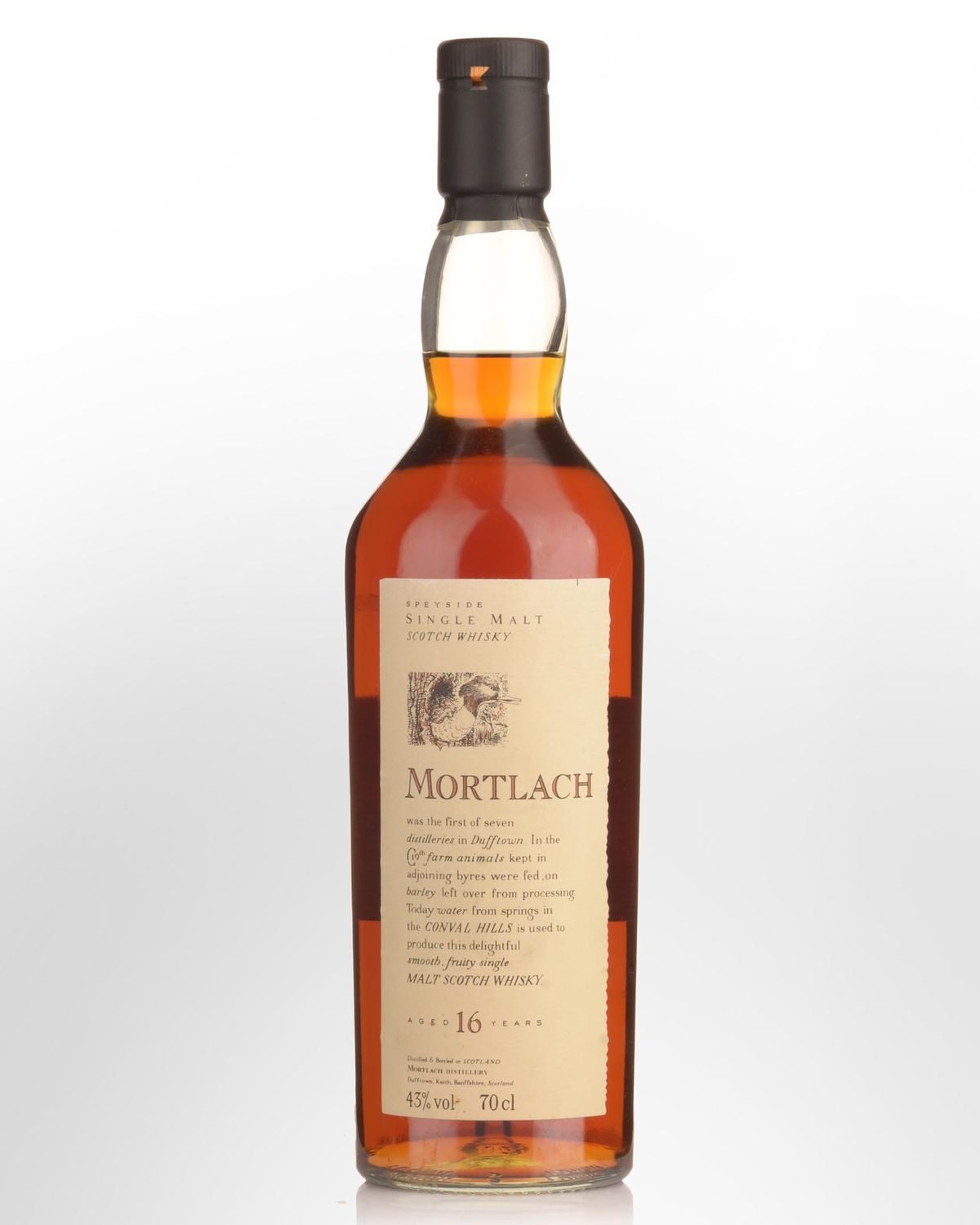
- Speyside, Highlands, SCOTLAND$399.00$399.00Bottle$4,788.00DozenABV: 43%
Amongst the nine distilleries around Dufftown, Mortlach meaning 'bowl-shaped valley", is the oldest. The second is Glenfiddich, founded by William Grant who was production manager at Mortlach.The distillery was created by James Findlater and two of his friends, Donald McIntosh and Alexander Gordon on a ground hired from the Earl of Mactuff. The creation date is not known for certain, but the license was officially delivered in 1823 making it the first legal distillery in Dufftown.
Mortlach was later taken over by John Gordon who marketed its whisky under the name "The real John Gordon". More recently, the distillery has been sold to Johnnie Walker & co. Walker joined DCL which became SMD before being integrated with UDV. A new distillery was built in 1964, but the old stills were still used. The water used in the mash comes from the nearby Conval Hills and is said to add a distinctive note to the malt.
Tasting note: Deep, burnished copper colour. Nosing reveals an immediate and profound Sherry influence led by rich, sweet scents of dried fruits followed by roasted nuts, vanilla and clove. The palate reflects the aroma with mouthfilling, medium dry flavours of juicy barley and delicate spice wrapped in a remarkably soft, almost creamy texture. The subtle honey/oatmeal finish also suggests the faintest trace of peat. The aftertaste which is not long lets the whisky down slightly, however this is a pure, well defined expression of unashamedly heavily Sherried malt that’s otherwise faultless - and increasingly hard to find. 43% Alc./VolPlease note: Bottles have minor label damage / scuffed labels.

 Click here to learn more about Scotch Whisky
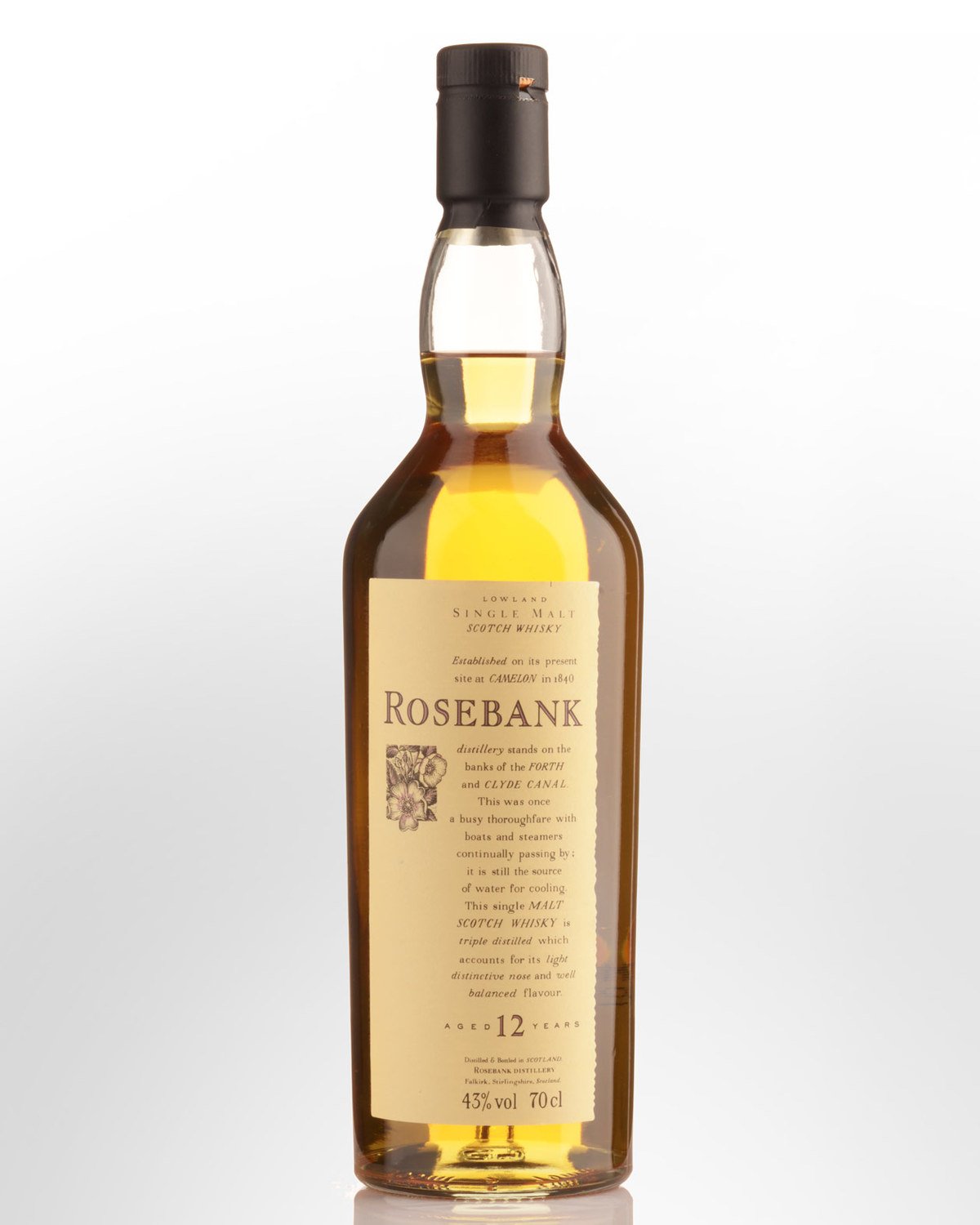
- Lowlands, SCOTLAND$999.00$999.00Bottle$11,988.00DozenABV: 43%
The Rosebank distillery is settled on the banks of the Forth-Clyde canal near Falkirk and has been mothballed since 1993. Considered as the Queen of all Lowland malts by some specialists, Rosebank is still available as a cask strength release in the 'Rare Malts' collection and independent bottlers have put several versions on the market. We are fortunate to have obtained very limited stocks of this rare gem under the 'Flora & Fauna' label.
This is a must for any serious whisky enthusiast or collector - it may be the last time Rosebank is available in Australia, at least at any half reasonable price.'...remains a cracking dram. Shame the distillery is being bulldozed. No, make that a disgrace'. - Dave Broom, www.whiskymag.comOther reviews... Nose: strands of honey and honeycomb entwine around a softly herbal, but enormously weighted maltiness... Taste: this has to be near perfection in regard to texture and not far off with the way the honey polished malt trips around the palate with an almost apologetic spiciness for accompaniment. Finish: long, more honeycomb with hints of liquorice and soft herbs...this is quite legendary stuff. 43% Alc./Vol.
95 points - note sourced from Jim Murray's Whisky Bible 2006 - Discontinued
- Nicks Import
- Reduced
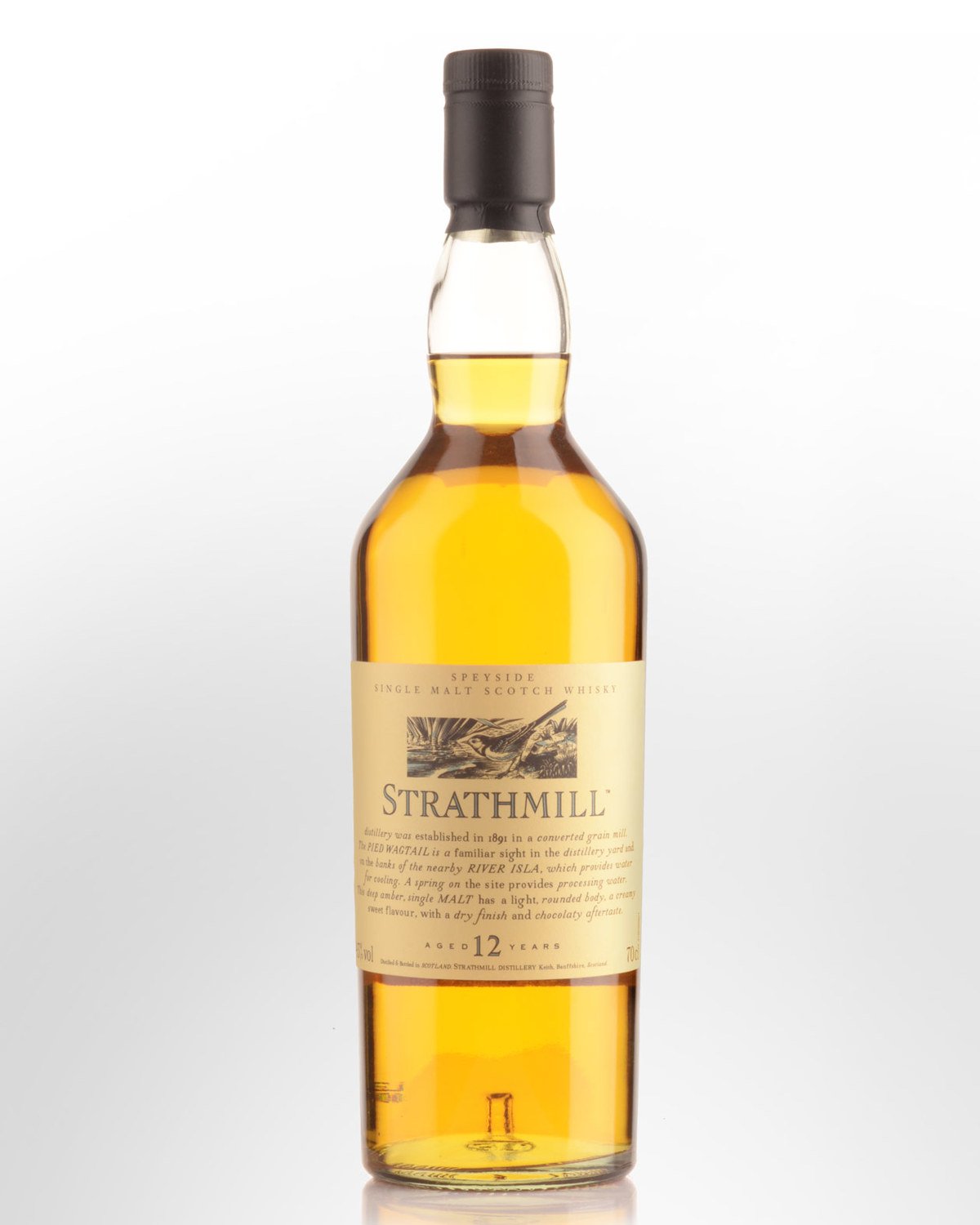
Strathmill Flora & Fauna 12 Year Old Single Malt Scotch Whisky (700ml)Speyside, Highlands, SCOTLANDReduced from$150.00$109.99$109.99Bottle$1,319.88DozenABV: 43%"I like this very natural malt..." - whiskyfun.com
Another Speysider distillery unknown to most, with the majority of its produce destined for blends - in particular J&B which sells over 30 million bottles globally. Strathmill eventuated in the whisky boom of the late 19th century, when almost thirty malt whisky distilleries were founded (some familiar names include, Balvenie, Dalwhinnie, Aberfeldy and Glen Moray). It commenced as a flour and corn mill factory in 1823 which was converted under the name Glenisla-Glenlivet. In 1895 the gin producers W. & A. Gilbey bought the distillery and changed the name to Strathmill ('the mill in the long valley'), which today falls under the Diageo umbrella. Due to a downturn in J&B sales circa 2020, demand for Strathmill's output declined to such an extent that the distillery has been producing gin as a side line.
With few surfacing, independent bottlers are the main source to sample Strathmill's delights, referred to by the likes of whisky writer Michael Jackson as "whisky's answer to orange Muscat". The still setup results in a lighter spirit, hinting at nuts, grass, ginger and peppery oak. More recently, various bottlings of Strathmill have received ratings as high as 96 points by Jim Murray. This 12 Year Old Flora & Fauna from Diageo was launched in 2001. 43% Alc./Vol.
Other reviews... It is a little unclear whether Diageo are still producing these or not. Some well-known websites claim that they've been discontinued but other do not, while the official website malts.com keeps listing this one. The last Strathmill F&F we've tried had been bottled circa 2007 (WF 79). I also remember that around twenty years ago, we used to talk about these - and the Rare Malts - as 'official independents'. How silly have we been! Colour: straw. Nose: some natural 'pure malt', that is to say rather all on porridge, muesli, leaven, grist and ale. There is, indeed, something very natural to it. Whiffs of warm brioche straight from the nearest French bakery, as well as not-too-aromatic fruits. Greengages, I would say. Mouth: this feeling of distilled beer that's sometimes to be found in malt whiskies. After all, that's what it is! Hops, herbs more greengages, more muesli, IPA and a little grapefruit. Tens to get more citrusy over time, almost acerbic, in a good way. Finish: of medium length, on more or less the same notes. Touch of pepper in the aftertaste. Comments: I like this very natural malt, so up one point! 80 points - whiskyfun.com
Notes from the bottlers... NOSE: Light prickle. A closed nose at full strength. A hint of ‘Café Noir’ biscuits. With water, solvent, sweet and minty at first. Light and creamy, becoming darker. Chocolate- chip, mint ice cream, then Toblerone. Roasted peanuts and their skins. Remains pleasantly clean. Dried parsley and moss. PALATE: Sweet start. Some acidity. FINISH: A medium-length, dry finish. Chocolaty aftertaste.
- Discontinued
- Nicks Import
- Reduced
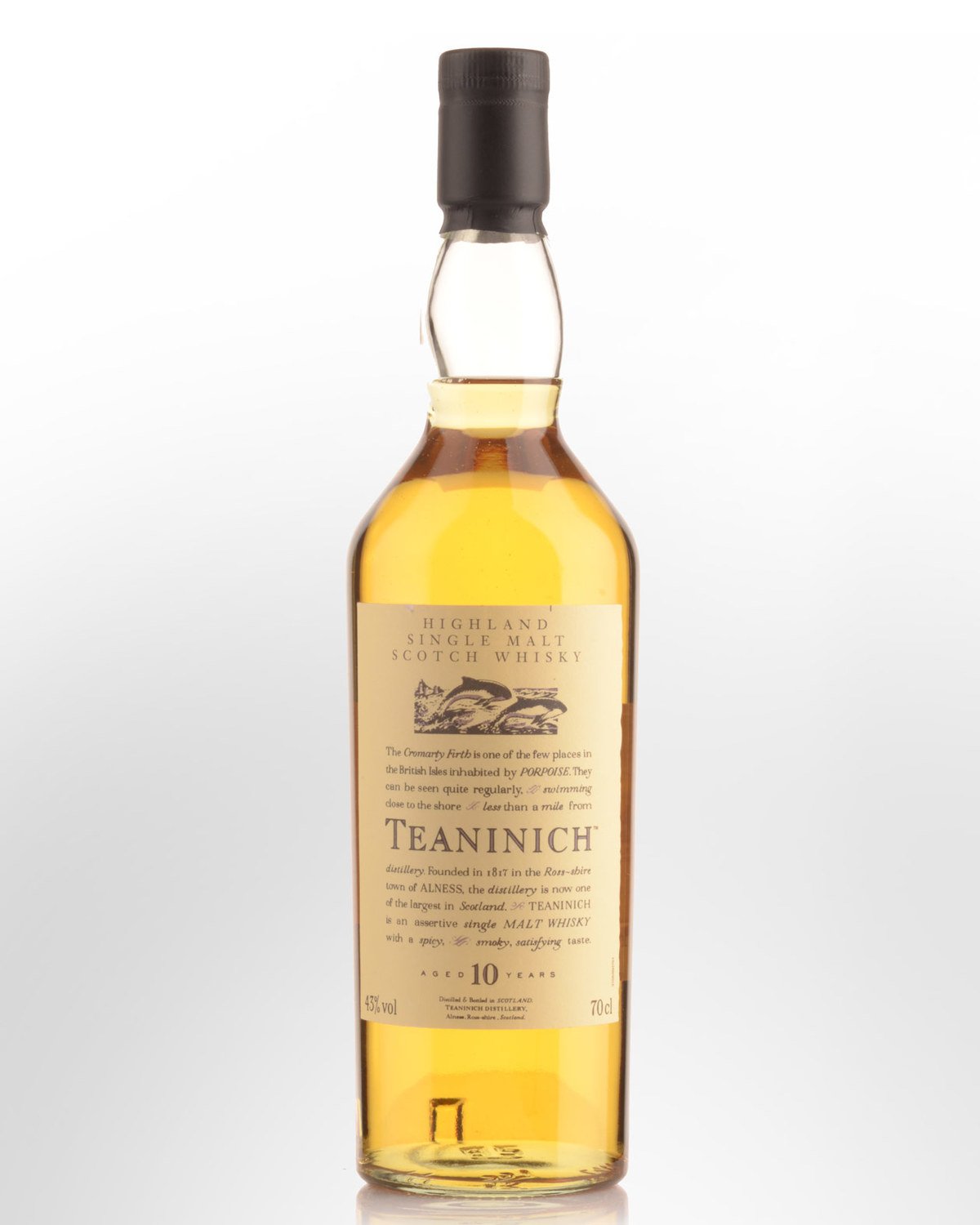
Teaninich Flora & Fauna 10 Year Old Single Malt Scotch Whisky (700ml)Highlands, SCOTLANDReduced from$149.99$109.99$109.99Bottle$1,319.88DozenABV: 43%"Very textured/oily, which I hadn’t expected." - whiskyfun.com Given that in April 2013, Diageo announced a new renovation of Teaninich as well as the building of a new distillery with 16 new stills right next to it (but with a different name and production schedule) this could well be the last Teaninich you'll secure from the original era at a reasonable price. Teaninich's focus is producing malts for blending (it's used in Johnnie Walker Red Label). Besides Diageo's Special Releases, there are almost no official bottlings, with indies offering the most. 43% Alc./Vol.
Other reviews... Colour: straw. Nose: very bready! I would believe it’s some Austrian malt just distilled in Tyrol and matured in small alpine oak casks for a few months. Quite. So bread, sour dough, plenty of porridge, and a curious smokiness. Charcoal smoke? Some hay as well. Mouth: full-bodied, very malty indeed, with notes of spicy bread, croissants, cereals, then rather lemon cake. A dryness in the background, around tea. Finish: medium, a tad sweeter, and always very bready. Comments: there’s something honest in this malty baby, for lack of a better term. Very textured/oily, which I hadn’t expected. 82 points - whiskyfun.com
One story (and there are a few) tells that the Diageo Flora and Fauna releases were born from a rather embarrassing situation. Increased awareness of the breadth of Scottish single malts (largely via the offerings of the independent bottlers) resulted in a surge of distillery tourism in the early to mid-nineties. Devotees - particularly of the more obscure malts - would travel to their favourite distillery, enjoy the warmth and hospitality on offer, get an education and at the end of the tour find the staff had nothing to offer in the way of a dram.
So the Flora and Fauna series of limited bottlings was gradually introduced to showcase the arts of the lesser known distilleries, those that had been bulldozed, mothballed or otherwise accessed by blenders only.
Flora and Fauna was not originally an official title, but a name coined by Michael Jackson, as every distillery bottling had its own animal or plant assigned to each respective label. The first tranche was released between 1991 and 1994, followed by a smattering of cask strength releases (discontinued and ultra rare) up until 1998 and four expressions in September 2001.
Initially the series was available only at the malt's distillery of origin. Gradually the collection made its way out of the distilleries and onto the shelves of top whisky purveyors. For the second time in four years, we've been able to source more of these malt classics for Australian whisky lovers.